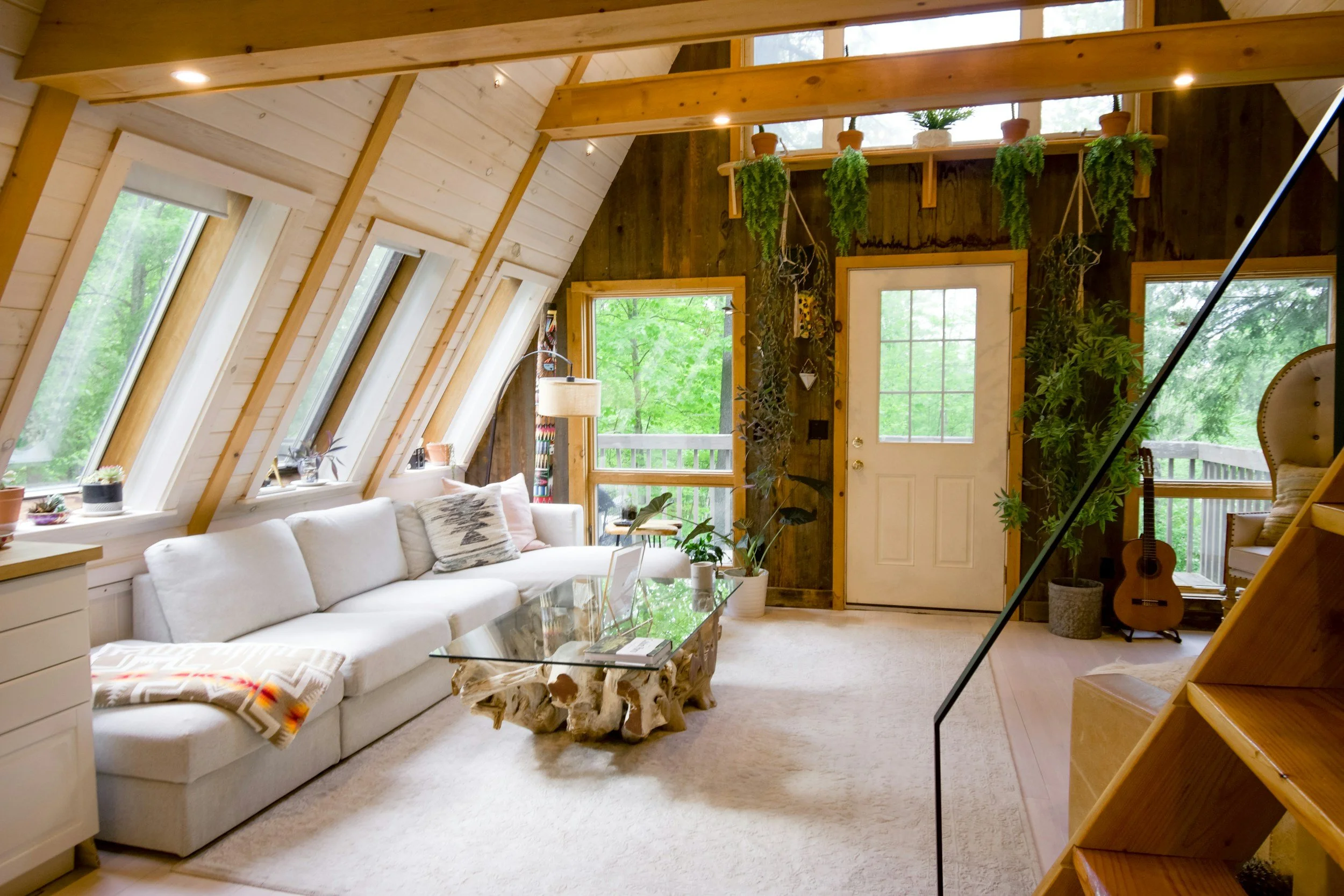
Airbnb & Income-Producing Property Design
Turn Unused Property Into New Possibilities
New Possibilities
What if the extra space on your property could do more than add square footage to your home? A thoughtfully designed guest house, accessory dwelling unit (ADU), garage apartment, detached suite, or private residential addition may provide additional space for family today—and the potential for rental income in the future.
At White Ink Design, we help Florida homeowners explore the possibilities of creating attractive, functional, independent living spaces on their existing property. With more than 26 years of residential design experience, we develop custom floor plans, guest house plans, ADU plans, garage apartment plans, residential blueprints, elevations, and construction drawings for properties throughout Jacksonville, Northeast Florida, Ponte Vedra Beach, St. Augustine, Palm Coast, Daytona Beach, Florida's East Coast, Orlando, and Central Florida.
Whether your vision is an Airbnb, vacation rental, long-term rental, guest house, mother-in-law suite, or private space for visiting family, White Ink Design can help you begin with a smart residential design.
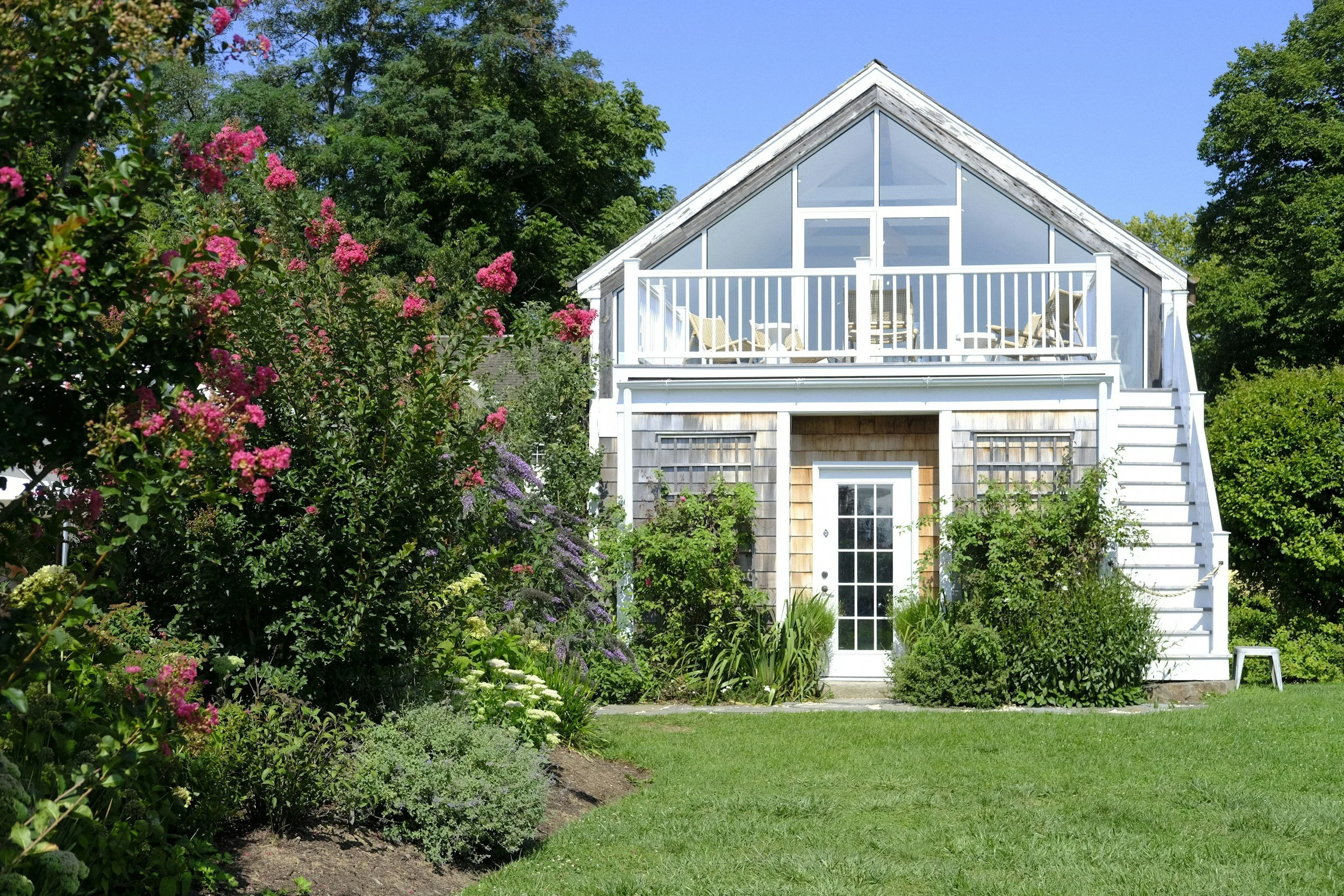
Could Your Backyard Become an Investment?
For many homeowners, an unused portion of a backyard, oversized lot, detached garage, or underutilized area of a property represents an opportunity.
Instead of purchasing an entirely separate investment property, you may be able to invest in the property you already own by creating a detached guest house, ADU, garage apartment, or private rental suite, subject to local zoning and building requirements.
The space can potentially serve several purposes throughout its lifetime:
Short-term vacation rental or Airbnb
Long-term residential rental
Guest house
Mother-in-law or in-law suite
Multigenerational living space
Housing for adult children
Private home office
Caregiver quarters
Garage apartment
Pool house with guest accommodations
Retirement or aging-in-place space
Flexible living space for future family needs
That flexibility can make an intelligently designed addition attractive even when rental income isn't the homeowner's only objective.
Understanding Revenue vs. Profit
Rental revenue and rental profit are not the same thing.
For example, if a property generated $45,000 in annual gross rental revenue, that does not mean the homeowner earned $45,000 in profit. Operating expenses may include utilities, insurance, maintenance, repairs, cleaning, furnishings, supplies, platform or management fees, taxes, landscaping, pest control, financing costs, and periodic replacement of furniture and equipment.
A simplified illustration might look like this:
Potential Gross Rental Revenue: $45,000/year
Estimated Operating Expenses: $15,000/year
Illustrative Net Operating Income: $30,000/year
That would equal approximately $2,500 per month before financing costs, income taxes, depreciation, major capital repairs, and other owner-specific expenses.
This is only an example—not a promise or projection of what a particular property will earn. Before making an investment decision, homeowners should develop a property-specific financial analysis using current comparable rentals and actual anticipated expenses.
How Much Could It Cost to Build?
Construction costs depend heavily on location, size, site conditions, finishes, utilities, foundation, roof design, kitchens and bathrooms, permitting, impact fees, contractor pricing, and the complexity of connecting a new structure to an existing property.
Smaller detached residences can also cost more per square foot than larger homes because expensive components—such as a kitchen, bathroom, electrical service, HVAC, plumbing, and utility connections—are concentrated into fewer square feet.
As one current Central Florida benchmark, 2026 construction-cost data for Orlando estimates approximately $174–$233 per square foot for a 600-square-foot ADU, or about $105,000–$140,000. Actual bids can vary considerably.
Using a broad $175–$250 per-square-foot planning range simply to illustrate how size can affect an initial budget:
Approximate Size. Possible Planning Range
400 sq. ft. studio/guest suite. $70,000–$100,000
600 sq. ft. 1-bedroom ADU $105,000–$150,000
800 sq. ft. 1–2 bedroom guest house $140,000–$200,000
1,000 sq. ft. 2-bedroom guest house $175,000–$250,000
1,200 sq. ft. 2–3 bedroom guest house $210,000–$300,000
*These figures are conceptual planning examples, not White Ink Design construction estimates or contractor quotes. Site work, utilities, permitting, engineering, design, premium finishes, pools, landscaping, unusual structural requirements, and other project costs may increase the total investment.
Design With the Guest in Mind
When designing a potential Airbnb or vacation rental, White Ink Design can think beyond simply creating another bedroom and bathroom.
A successful independent living space may benefit from features such as a private entrance, dedicated parking, full kitchen or kitchenette, private bathroom, laundry, comfortable living area, outdoor patio or porch, attractive natural lighting, storage, and separation from the primary residence.
Depending on the property and target guest, you might also consider:
Studio Guest House — An efficient option for couples, business travelers, or shorter stays.
One-Bedroom ADU — Provides additional privacy and may appeal to vacationers, seasonal residents, traveling professionals, or long-term tenants.
Two-Bedroom Guest House — Can accommodate families and small groups and may provide greater flexibility between short-term rental, long-term rental, and family use.
Garage Apartment — Combines valuable garage and storage space with independent living quarters above or adjacent to the garage.
Pool House or Cabana Suite — Combines outdoor living with guest accommodations and can create an appealing resort-style experience.
Mother-in-Law Suite — Designed primarily for family and multigenerational living but potentially adaptable to other permitted uses in the future.
Location Can Make a Big Difference
A rental unit near Jacksonville's employment centers, Northeast Florida beaches, Ponte Vedra Beach, historic St. Augustine, Palm Coast, Daytona Beach, Orlando attractions, hospitals, universities, entertainment districts, or other major destinations may experience very different demand than a similar property in another neighborhood.
Even within the same city, two properties only a few miles apart can produce very different rental results.
Before deciding how much to invest, homeowners should research comparable properties in the immediate neighborhood, paying particular attention to similar bedroom counts, amenities, property types, nightly rates, occupancy, reviews, and seasonality.
What Could a Florida Airbnb Potentially Earn?
Florida continues to attract vacationers, business travelers, families, seasonal residents, and people relocating to the state. However, short-term rental performance can vary significantly by location, property size, number of bedrooms, amenities, proximity to attractions or beaches, seasonality, competition, guest reviews, and local regulations.
As of August 2026, third-party short-term rental market data provides some useful examples. Average active short-term rentals were generating approximately $46,100 per year in Jacksonville, $38,200 in St. Augustine, $39,900 in Daytona Beach, and $46,800 in Orlando. These are market-wide averages—not projections for a particular property—and individual results can be substantially higher or lower.
Nightly rates also vary. Current market-wide average daily rates are approximately $235 in Jacksonville, $204 in St. Augustine, $232 in Daytona Beach, and $233 in Orlando, with average occupancy ranging roughly from 55% to 61% in those markets.
The important word is potential. Location and design matter.
A beautifully designed two-bedroom guest house with privacy, parking, an attractive entrance, outdoor living space, and a desirable location may compete very differently from a basic rental unit. That's why we believe an income-producing space should be designed not simply around square footage, but around the experience it provides.
What Could the Return Look Like?
Consider a hypothetical homeowner who invests $150,000 to create a well-designed detached guest house.
If that property eventually generated $45,000 in annual gross rental revenue and had $15,000 in annual operating expenses, the illustrative net operating income would be approximately $30,000 per year.
On a simple, unleveraged basis:
$30,000 ÷ $150,000 = 20%
That would represent an illustrative 20% annual return on the original construction investment before financing, income taxes, depreciation, major capital expenses, vacancies beyond the assumptions, and changes in market conditions.
At $20,000 of annual net operating income, the same $150,000 investment would represent approximately 13.3%.
At $15,000, it would represent 10%.
These examples demonstrate why construction budget, achievable nightly rate, occupancy, and operating expenses all matter. They are not forecasts of future performance.
Short-Term Rental or Long-Term Rental?
An important part of planning an income-producing addition is considering more than one possible use.
A short-term rental may have the potential to generate higher gross revenue in desirable tourist areas, but it generally requires more active management, cleaning, marketing, guest communication, furnishings, and turnover.
A long-term rental may offer lower gross monthly revenue but can potentially provide more predictable occupancy and require less day-to-day management.
Designing a space that could work for either short-term or long-term occupancy may give the homeowner greater flexibility if market conditions or local regulations change.
Know the Rules Before You Design
Not every Florida property can legally operate as an Airbnb or vacation rental.
Florida regulates certain vacation rentals at the state level, and cities and counties may have additional zoning, permitting, registration, occupancy, parking, safety, and short-term rental requirements. HOA and deed restrictions may impose additional limitations.
Because these requirements can vary from one property to another, homeowners should confirm that their intended use is permitted before making an investment decision or beginning construction.
White Ink Design can develop the residential design for your project, but zoning approval, licensing, rental eligibility, financial performance, and investment returns should be independently verified with the appropriate local authorities and professional advisers.
Build It for Today. Design It for Tomorrow.
One of the greatest advantages of an independent living space is that its value doesn't have to depend entirely on Airbnb.
A well-designed guest house might generate rental income today, provide a private place for visiting family next year, become a home for aging parents later, or eventually provide independent living space for an adult child.
That is why White Ink Design approaches these projects as homes first and potential investments second.
We want the space to be attractive, functional, comfortable, and adaptable—regardless of who occupies it.
Explore the Potential of Your Property
You may be looking at an empty backyard and seeing grass.
We may see a guest house, garage apartment, mother-in-law suite, pool house, ADU, vacation rental, or entirely new source of possibilities for your property.
With more than 26 years of residential design experience, White Ink Design creates custom ADU plans, Airbnb floor plans, vacation rental designs, guest house plans, garage apartment plans, residential additions, blueprints, elevations, and construction drawings throughout Jacksonville, Northeast Florida, Ponte Vedra Beach, St. Augustine, Palm Coast, Daytona Beach, Florida's East Coast, Orlando, and Central Florida.
Before purchasing another property, consider what might be possible on the property you already own.
Create space for your family. Create flexibility for the future. And, where permitted and financially viable, create the potential for additional income.
Design with an Ink.
White Ink Design — Capture the Heart of Your Home.